“Water, water, everywhere,
And all the boards did shrink;
Water, water, everywhere,
Not a drop to drink.”
― Samuel Taylor Coleridge, The Rime of the Ancient Mariner
Water scarcity involves water stress, water shortage and water crisis and this may be due to both humans and nature. Main factors that contribute to this issue include the poor management of resources, lack of government attention and man made waste.
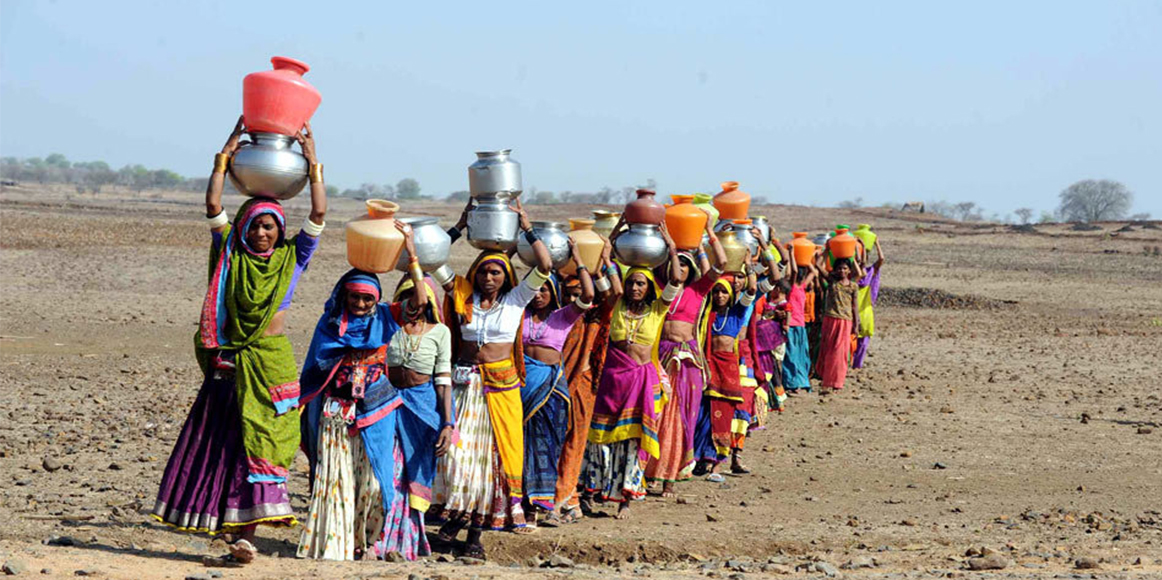
Water crisis in India is one of the major issues tormenting developing nations, as still millions of people in the country do not have access to safe drinking water and clear water and clear water for sanitation purposes. Over population has created a lot of stress on water resources in the country.
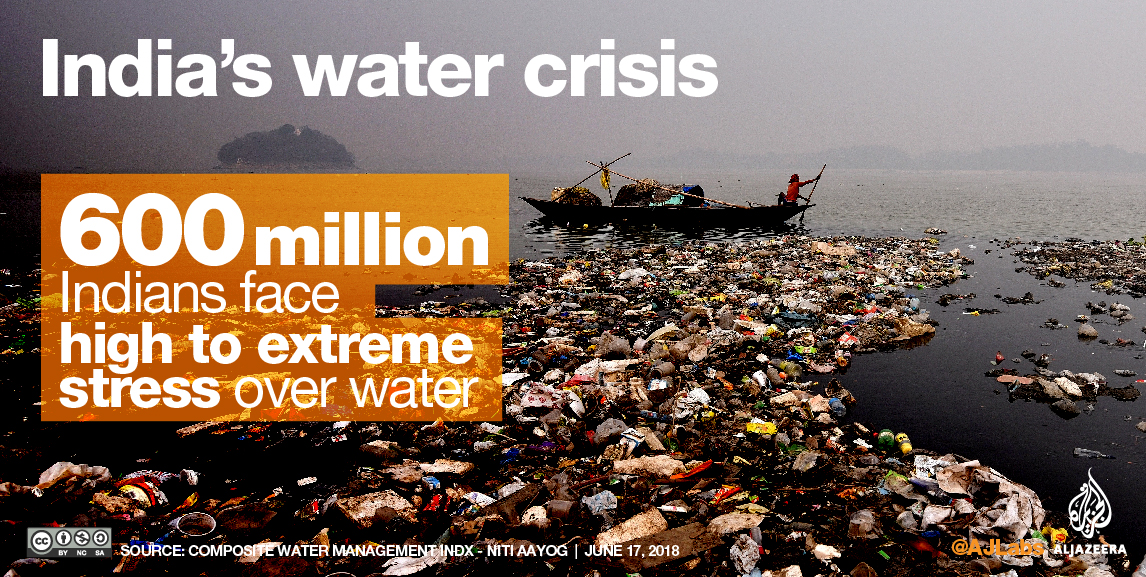
India with 18% of world population has the second largest population the world but has only access to 4% of usable water resources. Official data in past decade depicts how annual per capita availability of water in the country has plummeted significantly with 163 million Indians lacking access to safe drinking water. Niti Aayog report which draws on data from 24 of India’s 29 states says by 2030 country’s water demand is projected to be twice the available supply. It also warns that 21 cities are likely o run out of underground water by 2020. India is facing its worst ever water crisis, with some 600 million people facing acute water shortage. this would also threaten food security as 80% of water is used in agriculture.
Indians cities and towns regularly run out of water in summer because they lack infrastructure to deliver piped water to every home. Rural areas are also badly affected by lack of access to clean water. They cant rely on ground water because of erratic rains and fact that ground water is increasingly used for farming when monsoon rains are delayed or insufficient.
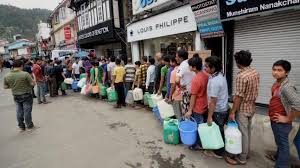
Around 2000 Indians die each year because they have no access to clean water, according to report many end up relying on private water suppliers or tanker. Winding queues of people waiting to collect water from tankers or public taps is a common sight in Indian slums. As cities and towns grow, pressure on urban water resources is expected to increase. Reports estimate that demand will be twice as much as available supply in 2030. Water scarcity would also account for a 6% less in India’s gross domestic produce(GDP) Especially in states of Maharashtra and Rajasthan. these are worst affected states in terms of drought, as a natural condition with man made calamities have made a significant impact on water resources. while Rajasthan’s situation is perennial problem due to geography of the state but Maharashtra scarcity problem is a direct result of mismanagement and climatic change, that adversely affected north west and west and east regions of state in recent years.
Some Indian states are doing a better job than others in managing their water. Gujarat in the west topped the reports rank. It was closely followed by Madhya Pradesh. In central Indian and Andhra Pradesh in South 15 out of 24 countries scored better than they did in the previous year leading to one of the report conclusions that water management is improving across the board but what remains alarming is that the states that are ranked the lowest such as Uttar Pradesh and Haryana in North or Bihar and Jharkhand in east are home to nearly half of India’s population as well the bulk of its agriculture produce. But the report said the policy makers face a difficult situation because there is not enough data available on how household and industries use and manage water.
According to the World Bank, India has taken significant steps to reduce poverty but the number of people who live in poverty is still highly disproportionate to the number of people who are middle-income, with a combined rate of over 52% of both rural and urban poor.
Although India has made improvements over the past decades to both the availability and quality of municipal drinking water systems, its large population has stressed planned water resources and rural areas are left out. In addition, rapid growth in India’s urban areas has stretched government solutions, which have been compromised by over-privatization.
Regardless of improvements to drinking water, many other water sources are contaminated with both bio and chemical pollutants, and over 21% of the country’s diseases are water-related. Furthermore, only 33% of the country has access to traditional sanitation.
One concern is that India may lack overall long-term availability of replenish able water resources. While India’s aquifers are currently associated with replenishing sources, the country is also a major grain producer with a great need for water to support the commodity. As with all countries with large agricultural output, excess water consumption for food production depletes the overall water table.
Many rural communities in India who are situated on the outskirts of urban sprawl also have little choice but to drill wells to access groundwater sources. However, any water system adds to the overall depletion of water. There is no easy answer for India which must tap into water sources for food and human sustenance, but India’s overall water availability is running dry.
India’s water crisis is often attributed to lack of government planning, increased corporate privatization, industrial and human waste and government corruption. In addition, water scarcity in India is expected to worsen as the overall population is expected to increase to 1.6 billion by year 2050. To that end, global water scarcity is expected to become a leading cause of national political conflict in the future, and the prognosis for India is no different.
On a positive note, some areas of India are fortunate to have a relatively wet climate, even in the most arid regions. However, with no rain catchment programs in place, most of the water is displaced or dried up instead of used. In these areas, rain harvesting could be one solution for water collection. Collected water can be immediately used for agriculture, and with improved filtration practices to reduce water-borne pathogens, also quickly available for human consumption.
Whatever the means, India needs solutions now. Children in 100 million homes in the country lack water, and one out of every two children are malnourished.
Environmental justice needs to be restored to India so that families can raise their children with dignity, and providing water to communities is one such way to best ensure that chance.
” There is an imminent need to deepen our understanding of our water resources and usage and put in place interventions that make our water use efficient and sustainable.”
If the earth is a mother then rivers are her veins.”
― Amit Kalantri, Wealth of Words
What are people waiting for? Are they waiting for the day when they will have to starve for the drop of water and why cannot they save water at reasonable price rather than paying heavy price of their lives for water.
References:
Water scarcity in India. Wastewater treatment systems are needed
https://thewaterproject.org/water-crisis/water-in-crisis-india
https://www.aljazeera.com/news/2018/06/india-faces-worst-water-crisis-report-180616072654630.html
https://www.aljazeera.com/news/2018/06/india-faces-worst-water-crisis-report-180616072654630.html
Efforts by: Simarpreet kaur and Manisha manisha
https://www.aljazeera.com/news/2018/06/india-faces-worst-water-crisis-report-180616072654630.html
https://www.aljazeera.com/news/2018/06/india-faces-worst-water-crisis-report-180616072654630.html
https://www.aljazeera.com/news/2018/06/india-faces-worst-water-crisis-report-180616072654630.html
 WATER CRISIS - SAVE LIKE A LOCAL